

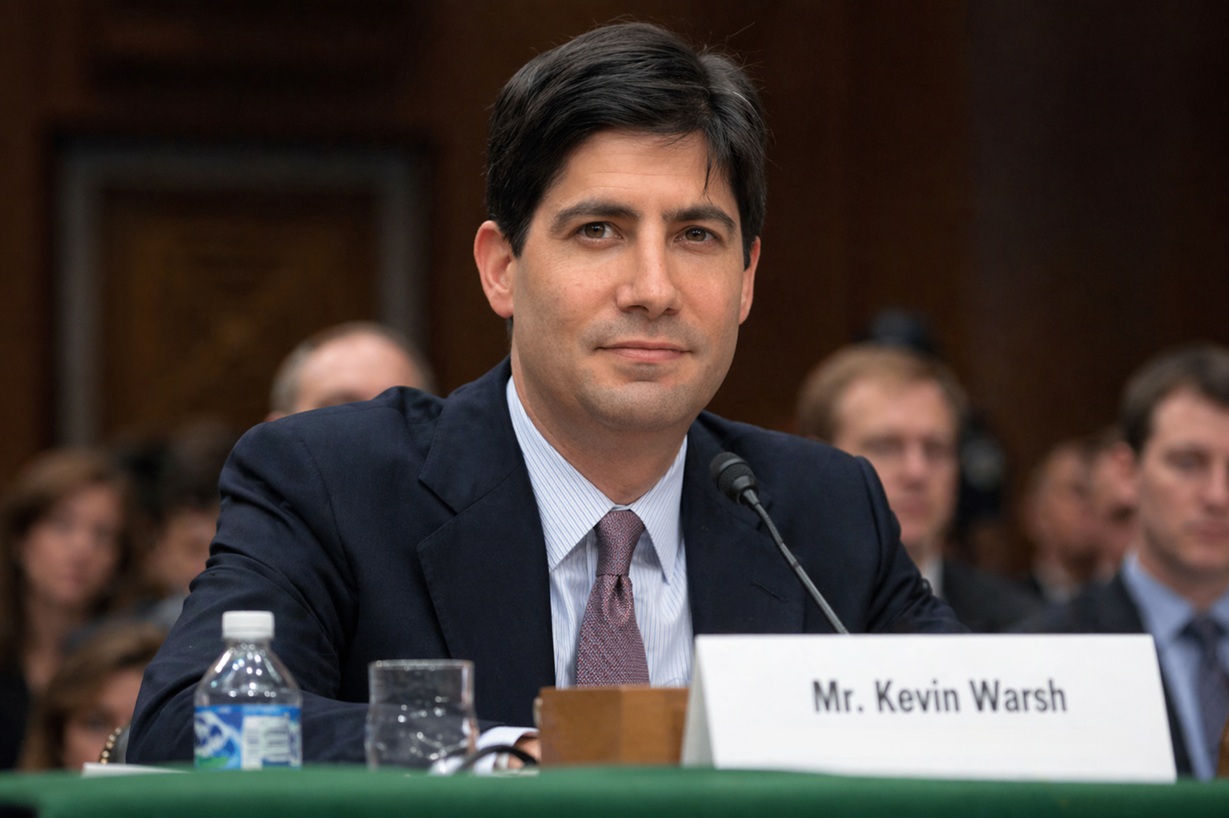
- The Senate grilled Fed chair nominee Kevin Warsh about his political affiliations and stance on CBDCs.
- Warsh assured that he will maintain the central bank’s autonomy from political influence while vowing to block attempts for a CBDC.
The Clarity Act’s Senate markup took a backseat this week for the confirmation hearing of Kevin Warsh. The president’s handpicked successor to outgoing Federal Reserve Chairman Jerome Powell ensured the independence of the US central bank amid concerns of his Republican alignment. He also guaranteed that his administration would never favor a retail Central Bank Digital Currency (CBDC).
Assuring a Non-Partisan Fed
Warsh came under heavy fire from President Donald Trump’s critics at the Senate Banking Committee hearing, as lawmakers bombarded him with inquiries about his political alignment. One notable instance was when Senator Elizabeth Warren, a top Democrat on the committee, baited him with a question like who won the 2020 election.
Warsh cleverly dodged Warren’s line of questioning by reminding her that the Congress, of which she was a member, certified the outcome of the polls during that period. Additionally, he firmly told the senator to keep politics out of the nation’s monetary policy.
The Fed chair nominee told lawmakers that the president never once asked him to commit to any particular interest rate, and even if he had, he wouldn’t have agreed to it. He assured that he will set rate policies in accordance with the needs of the economy.
Warsh has previously advocated lower interest rates, but he declined to comment on whether Trump’s proposed 1% rate, or lower, will boost the economy or lead to inflation.
Kevin Warsh Opposes Efforts for a Retail CBDC
Warsh then committed to Senator Bernie Moreno from the Republican Party that he will never support a CBDC. It’s worth noting, though, that he meant the retail version of the central bank asset, not its wholesale version.
For context, a retail CBDC (rCBDC) is a digital currency issued by a central bank intended for everyday payments. On the other hand, a wholesale CBDC (wCBDC) is designed for quick, efficient settlement between financial institutions.
Warsh reiterated his stance on the matter during an economic forum at the Reagan Institute last year. He echoed the same privacy and control concerns about rCBDCs that Trump has aired since the 2024 campaign season.
Overall, Warsh considered a retail CBDC a “bad policy choice” for the Fed. Likewise, he said the central bank “doesn’t have the right” to issue such an asset.
What’s your Reaction?
+1
0
+1
0

+1
0

+1
0

+1
0

+1
0

+1
0