
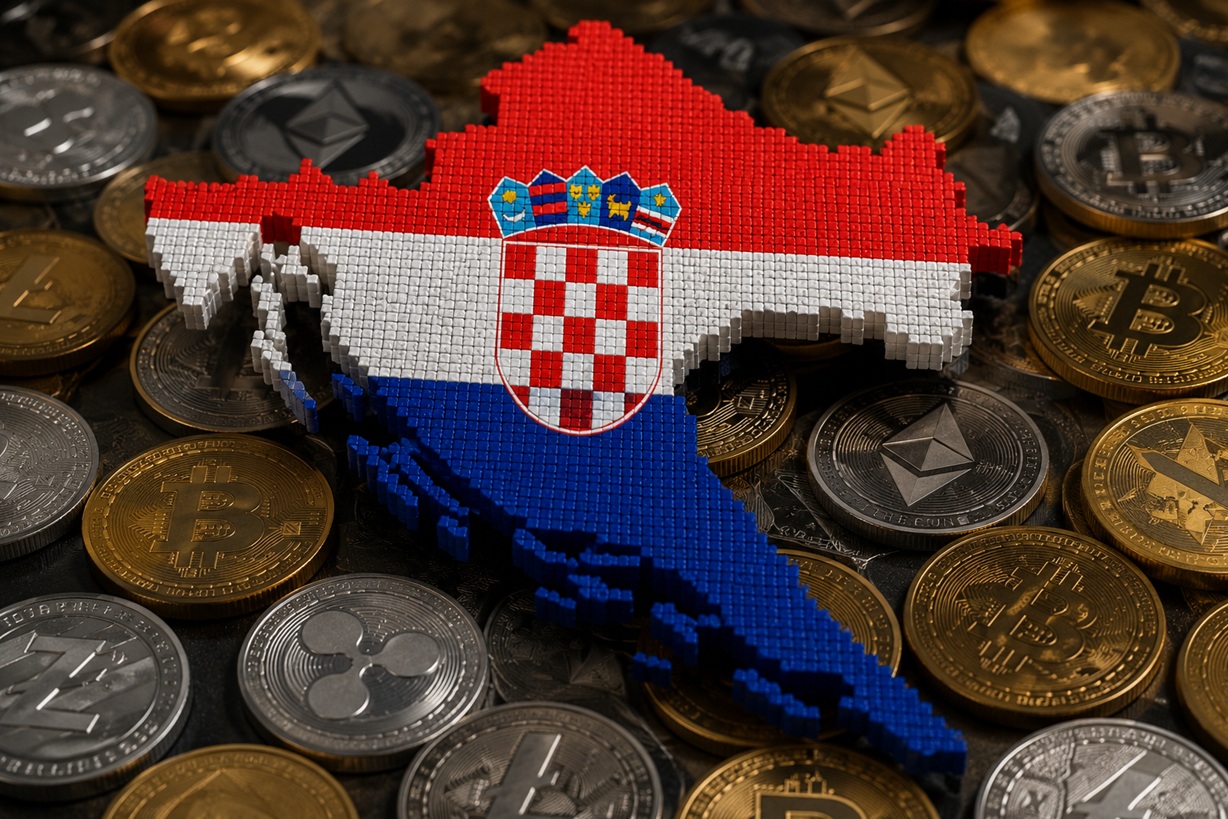
- Electrocoin CEO Nikola Škorić claimed MiCA has significantly reduced the number of crypto companies operating in Croatia to seven.
- The figures have also changed the country’s crypto market dynamics, narrowing competition and customer choices.
Crafters of the Markets in Crypto-Assets (MiCA) regulation seemingly had a noble goal: creating a comprehensive, uniform legal framework for digital assets. It aimed to ensure investor protection and financial stability while promoting innovation.
However, Nikola Škorić, CEO of Croatia-based Electrocoin, lamented that the legal framework has significantly trimmed down crypto companies in his country alone.
MiCA Trimming the Herd
According to Škorić, there are now only seven crypto companies in Croatia. These include two traditional crypto brokers, one subsidiary of a global exchange, and four local companies. Of the local companies, two are operating as portfolio managers, and one is a market maker.
Electrocoin was notably the first company in Croatia to secure a Crypto Asset Service Provider (CASP) license under the MiCA regime. It provides crypto-to-fiat conversions, crypto-to-crypto exchanges, digital asset custody services, and asset management for clients.
Meanwhile, White Tech is a business- and user-focused trading platform. It is majority-owned by Volodymyr Nosov, founder and CEO of WhiteBIT.
The rest include Illiricka, Incrementum, Orcabay, Alaric Securities, and Belayer. However, Škorić highlighted that only Electrocoin is authorized to sell crypto directly, act as infrastructure for banks, and serve as a crypto acquirer for merchants.
Additionally, Škorić emphasized that there were actually 16 companies that registered as crypto companies in Croatia. Only two currently hold a CASP license: Electrocoin and White Tech.
Why It Matters
Škorić explained that the changes in Croatia’s digital asset ecosystem go further than the number of crypto companies. The trend has also impacted market dynamics.
The CEO of Electrocoin pointed out that crypto used to be a remote service. One could plug into a provider from anywhere in Europe or outside. But then, MiCA narrowed the model to localized regulation and continuous supervision. Moreover, it marked a deeper integration with banks and merchants that went beyond the API (Application Programming Interface) level.
Škorić said the setup meant that local presence matters more than before MiCA. He discussed that while the seven crypto companies excel in asset, execution, and liquidity execution management, only a few can support the full lifecycle from euros to crypto, API integration, and payment infrastructure.
Overall, MiCA has narrowed the choices for banks or merchants wanting to integrate crypto-related products and services to a few players.
Disproportionate Effect of MiCA on Small Crypto Companies
Škorić’s criticism runs parallel to the challenges BeInCrypto identified, which it believes are curbing competition from small crypto companies in Europe. It noted that while MiCA removed bad actors, it also disproportionately affected companies lacking deep capital reserves.
One issue trimming small companies from the herd is the exorbitant licensing and compliance costs. Startups must raise at least €250,000 for licensing, €80,000 for compliance officer salaries, and €50,000 for legal fees. Likewise, stablecoin issuers must maintain a reserve capital of at least €5 million. These could easily balloon depending on factors like the company’s profile.
Furthermore, different jurisdictions have varying interpretations of MiCA, forcing some companies to relocate from areas rife with bureaucratic bottlenecks to locations with clearer, leaner interpretations and implementation of the legal framework.
What’s your Reaction?
+1
4

+1
0

+1
0

+1
0

+1
0

+1
0

+1
0