

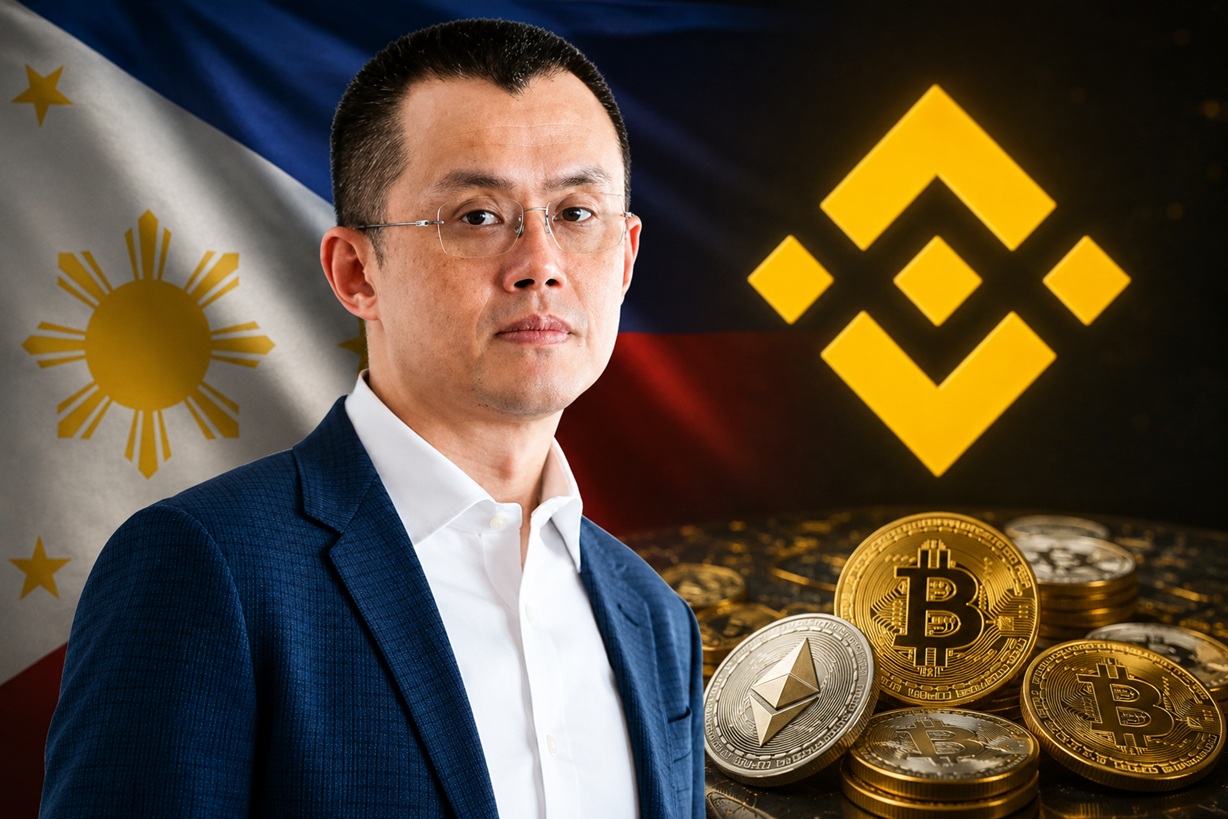
- CZ fired back at legacy banking systems that are lashing out at blockchain and crypto, even though they are already struggling to catch up.
- Along the way, Binance’s reentry into the Philippines faces renewed scrutiny due to its partner company’s alleged links to a politician facing nearly $1 plunder charges.
Changpeng “CZ” Zhao, former CEO of Binance, boldly proclaimed that banks will be obsolete if they fail to embrace crypto and blockchain. His statement comes ahead of Binance’s controversial reentry to the Philippines after its exit in 2023.
Blockchain and Crypto Making Legacy Banking Systems Obsolete
CZ’s statement came as a consequence of several players in the banking industry either continuing to block digital asset regulations or stubbornly refusing to integrate crypto and blockchain into their key products and services. One of them was Jamie Dimon, CEO of JPMorgan, who just declared that their alliance with big banks will do everything in their power to block the passage of the Clarity Act.
Experts like CZ argue that traditional banking is limping toward its last leg as crypto and blockchain technologies become mainstream. It’s largely due to their reliance on centralized ledgers, multi-day settlement windows, and intermediaries.
Blockchain and crypto directly challenge legacy systems in finance with their round-the-clock liquidity that seamlessly enables near-instant settlements 24/7. Additionally, they significantly cut transaction fees, reducing them to a fraction of a dollar through smart contract automation rather than involving multi-party correspondent banking and clearinghouses in the process.
For these reasons, capital markets are moving toward real-world asset (RWA) tokenization. To date, tokenized RWAs have grown into a market cap of $715.78 billion, with tokenized repos (repurchase agreements) accounting for $358.76 billion of the flow.
Binance Faces Controversy in Philippine Reentry
Recently, Binance finally confirmed its long-rumored reentry to the Philippine market via a partnership with BlockShoals. It came around three years after the Securities and Exchange Commission (SEC) flagged it as an unregistered corporation and lacking a license to sell or offer securities within its jurisdiction. The decision also led the National Telecommunications Commission (NTC) to geo-block its web, app, and other platforms in the country.
As Filipino consumers eagerly await the giant crypto exchange’s return, several local news outlets have sounded the alarm over the people steamrolling its comeback. The Bilyonaryo News Channel reported that the company led by CEO Nicholas Anthony Te, son of Philippine Stock Exchange (PSE) director Anthony Te, has strong ties with a politician facing plunder accusations in the country.
The source established an association between Te and Martin Romualdez, a former House Speaker in the Philippine House of Representatives, over their common involvement in several firms, particularly Marcventures Holdings and Benguet Corporation. Romualdez is currently the subject of the government’s plunder probe for his alleged kickbacks in public infrastructure projects, totalling nearly $1 billion in ill-gotten wealth.
The Te-Romualdez connection led to speculations that the former House Speaker may be looking to channel his spoils across BlockShoals’ expanded rails via Binance. However, BlockShoals vehemently denied the accusations, clarifying that the politician has no direct ownership interest in the venture.
What’s your Reaction?
+1
5
+1
0

+1
0

+1
0

+1
0

+1
0

+1
0