
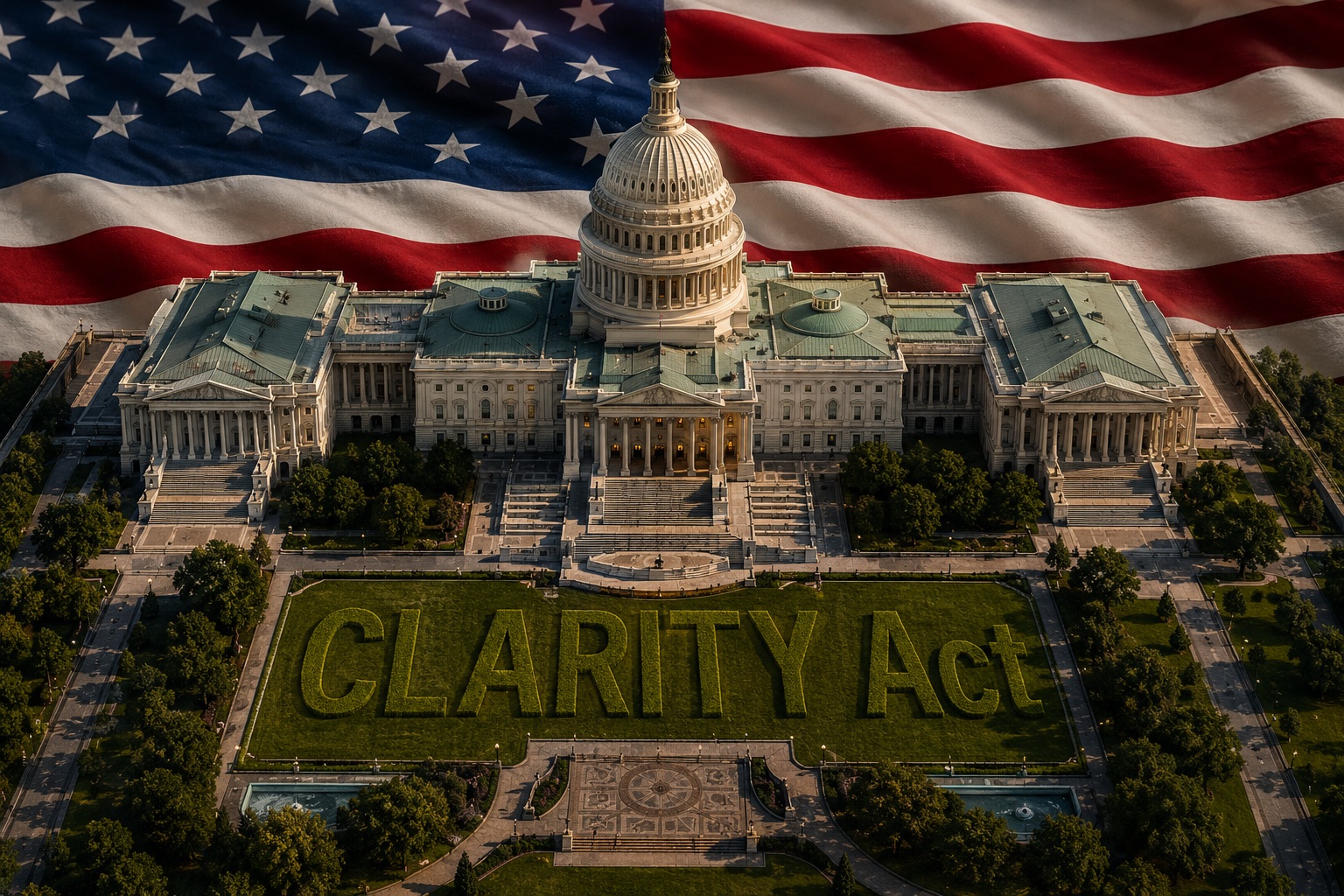
- SEC Chair Paul Atkins is optimistic that the CLARITY Act will get the Senate’s approval by September 15.
- He said the SEC has its own proposal for crypto regulation that aligns with the CLARITY Act’s goals.
- However, the same rules can stand on their own even if Congress fails to act on the pending crypto legislation.
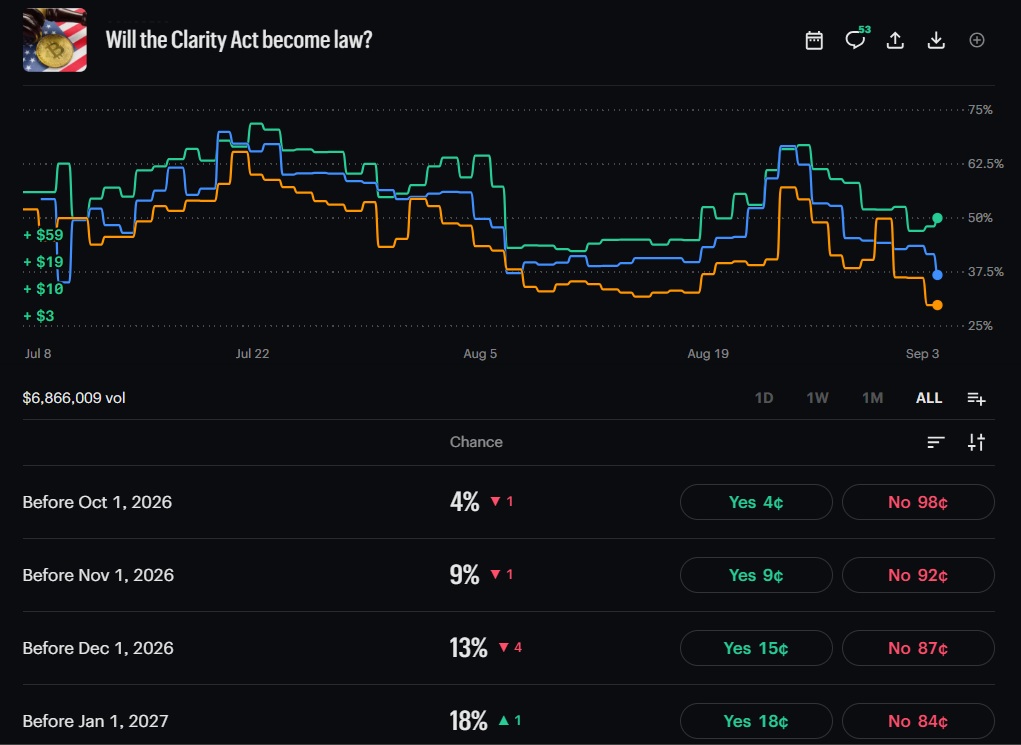
- Odds of the CLARITY Act’s success in Congress are only 14% and 18% on Polymarket and Kalshi, respectively.
US Congress will resume session in less than two weeks. Following one delay after the other, a majority in the crypto community is already beginning to accept the fact that the Digital Asset Market CLARITY Act may not make it into law this year.
However, Securities and Exchange Commission Chair Paul Atkins remains optimistic on the bill’s prospect of reaching President Donald Trump’s desk for signature before year-end.
SEC Chair Atkins’ Optimism in the Incoming CLARITY Act Vote
During Wednesday’s Mornings with Maria on Fox Business, Atkins confirmed with the host, Cheryl Casone, that the CLARITY Act will head to a vote by September 15. He expressed confidence that it will pass.
“The Clarity Act will be voted on in the Senate on the 15th of September,” said Atkins. “I anticipate and hope that it will be passed by the Senate and sent ultimately to the president’s desk for signature.”
Before Congress went into recess, Senate Majority Leader John Thune notably filed a cloture motion on the pending digital asset bill, with the procedural vote due in mid-September. If his motion secures at least 60 votes to overcome a filibuster, it would end debate on the legislation and push it to a final floor vote. Its success would eventually move the CLARITY Act for Trump’s signature.
Prediction markets are not reflecting the SEC chair’s projection, though. Odds of Trump signing the CLARITY Act into law this year are still near an all-time low on Polymarket, with only 14% agreeing with Atkins. Meanwhile, its chances at Kalshi under the same parameters are merely 18%, underscoring market participants’ skepticism.
Among the key hurdles the CLARITY Act faces in the Senate are its ethics provisions safeguarding against conflicts of interest, safe harbor provisions for open-source software developers, and the recurring issue of stablecoin yields.
The SEC’s Proposed Crypto Rules Vs the CLARITY Act
Along the way, Atkins told the host that regardless of the CLARITY Act’s fate in Congress, the SEC is dead set on proceeding with its proposed crypto guidelines to support innovations in the US digital assets sphere and ensure the realization of Trump’s vision of turning America into the “crypto capital of the world.”
Atkins explained that the proposal harmonizes with the CLARITY Act’s goal. Nonetheless, it can stand alone even if the bill fails, and the SEC has authority under the law to regulate the crypto market even if Congress does not act.
Still, Atkins reiterated his earlier stance that the CLARITY Act becoming a law remains the more favorable outcome, as it codifies clear regulations in the digital asset market.
What’s your Reaction?
+1
2

+1
0

+1
0

+1
0

+1
2

+1
0

+1
0