
- 70% of Binance’s displaced users following its EU exit opted to transfer their funds to self-custody wallets.
- CEO Richard Teng said they are not completely ruling out Europe for their operations, but are just exploring a better venue to reenter the market.
Most analysts expected that Binance’s exit from the European Economic Area (EEA) would direct an influx of displaced users to other centralized crypto exchanges authorized by the Markets in Crypto Assets (MiCA) Regulation. However, the company’s CEO, Richard Teng, revealed that it wasn’t the case.
Binance’s Exit From Europe
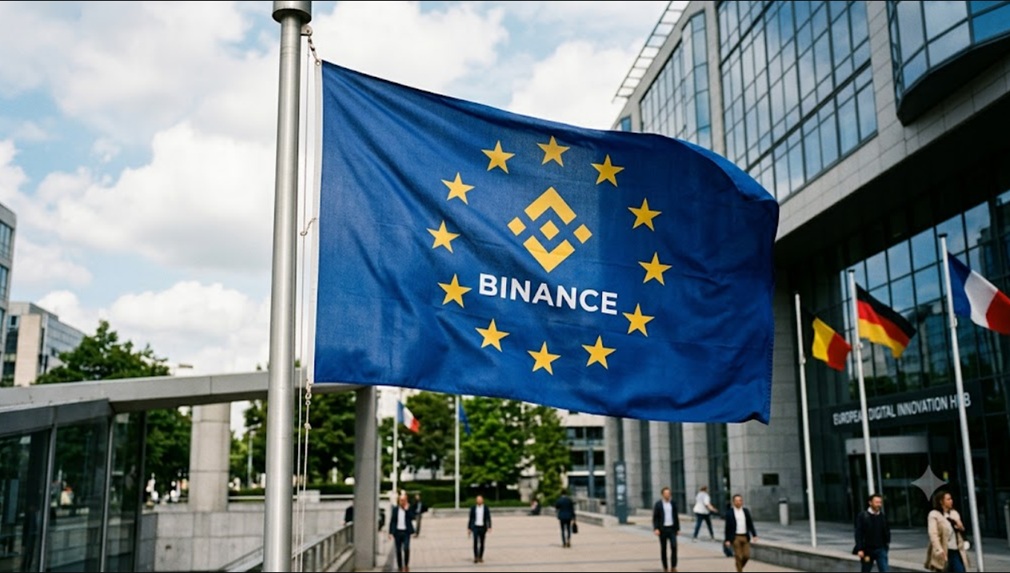
Binance, the world’s largest crypto exchange by trading volume, has officially left the EEA following the full enforcement of MiCA. It’s not ruling out the possibility of returning to the jurisdiction if another opportunity arises, though.
Until now, the company has not released a specific reason behind its setback in Europe. Co-founder Changpeng “CZ” Zhao hinted that politics got in the way of its application for a Crypto Asset Service Provider (CASP) with Greece’s Hellenic Capital Market Commission (HCMC).
Meanwhile, Teng claimed that Binance had a fully compliant application with Greek regulators. Repeated delays without an official explanation from the HCMC eventually forced it to voluntarily withdraw its MiCA bid before the transition deadline last July 1.
Other crypto personalities threw in speculations about the European Central Bank (ECB) derailing Binance to weaken the crypto market in preparation for the digital euro. On the other hand, Star Xu, CEO of OKX and major critic of its competitor, pointed out that Binance’s lack of a MiCA license was its own undoing because it never prioritized regulatory compliance from the get-go.
Where Most EU Withdrawals From Binance Went
Interestingly, many displaced crypto users from Binance’s strategic retreat from Europe didn’t automatically move their assets to rival crypto exchanges that successfully secured MiCA authorization, including Kraken, Coinbase, OKX, Bitpanda, and Bitstamp.
Teng highlighted that around 70% of their users chose to transfer their funds to self-custodied wallets. Others mostly preferred popular, deep-liquidity platforms, such as Coinbase, OKX, or Kraken.
The trend indicates that European crypto users either lack confidence in the full enforcement of the new digital asset regime or are simply prioritizing a more convenient way to secure their holdings. Their action strikes a blow to regulators who projected that the new rules would lead users into tightly monitored systems.
What’s Next for Binance
Teng reiterated that MiCA is an important piece of legislation because it provides regulatory clarity and market harmony in the EEA. He also said Binance spends more than $300 million annually on compliance, but it has to walk away from the region for the time being as it explores a “constructive path” through proper channels.
Currently, Binance is focused on its expansion in Asia, as it stages a huge comeback in the Philippines via a partnership with BlockShoals, a fintech company incorporated in the country and regulated by the Philippine Securities and Exchange Commission (SEC).
What’s your Reaction?
+1
0
+1
0

+1
0

+1
0

+1
0

+1
0

+1
0