

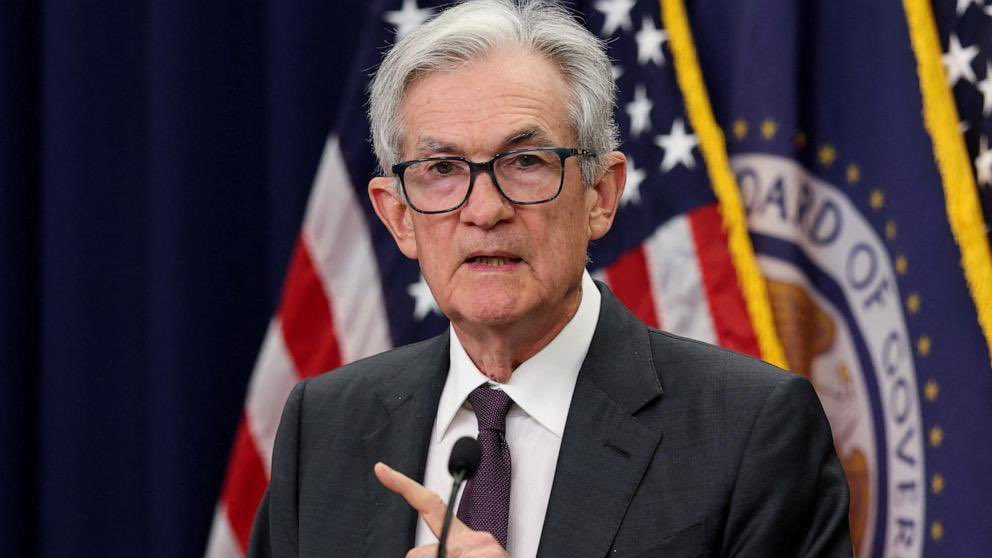
- The central bank will inject about $40 billion per month into Treasury bills, stabilizing reserves without a full QE reboot.
- With bank reserves falling to $2.83T, the Fed aims to prevent money-market stress using short-term T-bill purchases.
- Despite a 25 bps rate cut, dissenting FOMC voices signal growing internal division ahead of a data-dependent 2026.
The Federal Reserve announced on December 10, 2025, during its Federal Open Market Committee (FOMC) meeting that it will begin buying approximately $40 billion in Treasury bills (T-bills) over the next 30 days. The buys will kick off immediately and continue monthly. They will inject much-needed liquidity into the banking system without reigniting full-scale quantitative easing (QE).
Fed’s New Liquidity Injection Plan
This decision marks a clear departure from the Fed’s quantitative tightening (QT) phase, which has been gradually unwinding since mid-2024. Under QT, the central bank allowed up to $60B Treasuries and $35B in mortgage-backed securities (MBS) to roll off its balance sheet each month.
With QT officially concluding this month, the Fed is redirecting proceeds from maturing MBS into T-bill buys. Combined with the new $40 billion commitment, this could total around $55 billion to $60 billion in monthly bill purchases.
Stabilizing the Fed Balance Sheet
Fed officials emphasized the need for “ample” reserves to prevent disruptions like the 2019 repo market crisis. Bank reserves have fallen to about $2.83 trillion from $4.27T (2021), sparking concerns over potential strains in money markets.
By focusing on short-term T-bills with maturities of 4 to 52 weeks, the Fed avoids extending duration risks while stabilizing its massive $7.1 trillion balance sheet. The goal is to align the sheet’s size with 3% to 5% nominal GDP growth, preventing scarcity without outright expansion.
The announcement aligns with Wall Street expectations. UBS had forecasted about $40 billion monthly starting early 2026, while Bank of America called for roughly $45 billion in an “out-of-consensus” prediction. Analysts see this as a prudent step in a cooling economy, where inflation has eased to 2.4% and unemployment holds steady at 4.1%.
Accompanying the liquidity boost was a 25 basis point cut to the federal funds rate, bringing it to 3.50%-3.75%—the third reduction of 2025. However, not all were on board: FOMC members Schmid and Goolsbee dissented, favoring no change. The Fed signaled that further rate adjustments would depend on the “extent and timing” of economic data, hinting that cuts might pause for now.
Powell’s Remarks and Market Outlook
In his post-meeting remarks, Chair Jerome Powell highlighted growing downside risks to employment, noting that U.S. inflation “remains somewhat elevated” with recent upticks in goods prices. He described current interest rates as in a “plausible range of neutral” and revised the 2026 GDP growth forecast upward. Yet, Powell acknowledged internal divisions, with the dissent underscoring a widening split at the Fed.
Market reactions were mixed, with Treasury yields dipping slightly as investors digested the news. Economists say this could support a “soft landing,” but warn that persistent inflation pressures might force the Fed to reassess.
As Powell put it, the path ahead remains data-dependent, leaving room for surprises in 2026.
What’s your Reaction?
+1
1
+1
0

+1
0

+1
0

+1
0

+1
0

+1
0