
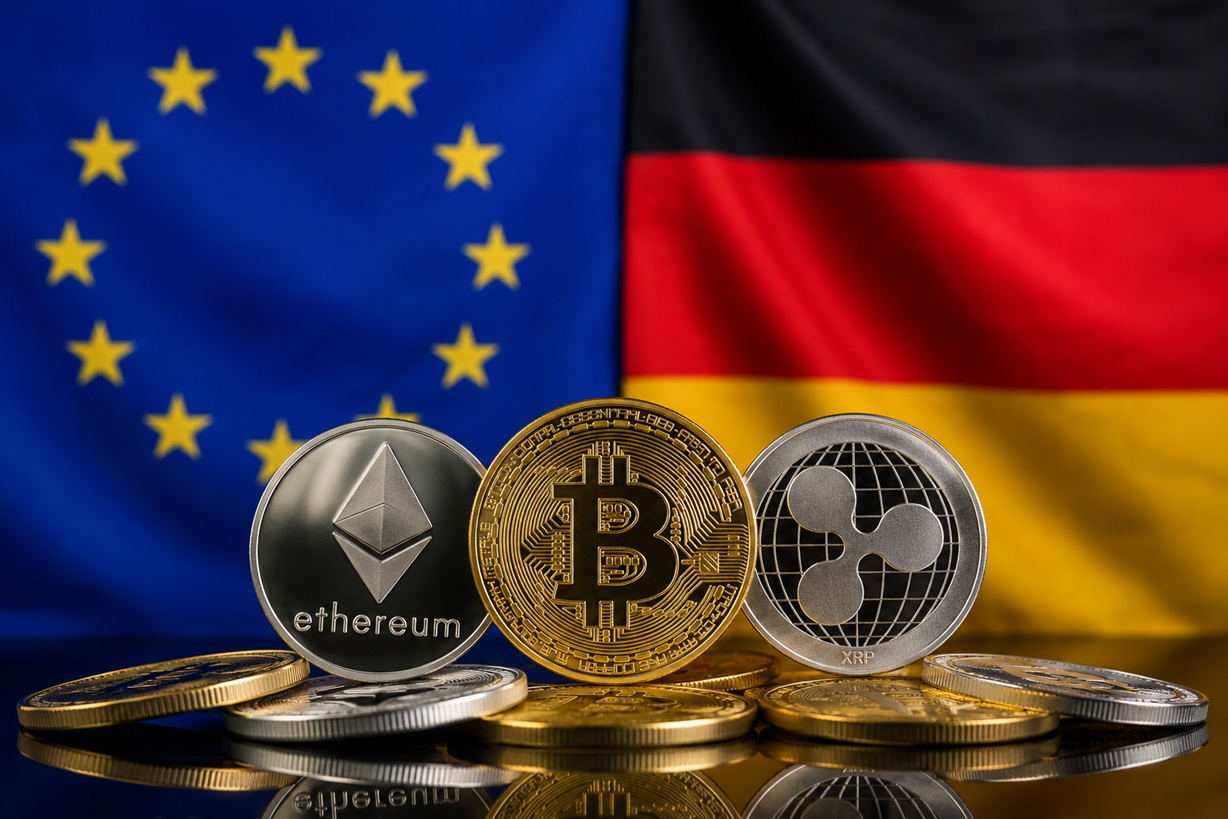
- MiCA regulations are already in full force, leaving the market exclusively to compliant crypto exchanges in Germany.
- The deeply rooted compliance mechanisms of Coinbase, Bitpanda, BISON, and BSDEX have paid off as other major exchanges have exited the EEA market.
The Markets in Crypto Assets (MiCA) Regulation has transitioned into full enforcement after its grace period ended in June. By July 1, many non-compliant crypto exchanges have ceased operations in the European Economic Area (EEA) to avoid financial, operational, and reputational penalties as well as potential criminal liabilities.
The immediate aftermath was staggering, as just more than 200 firms secured their licenses ahead of MiCA’s full implementation out of the 3,000 entities operating within the EEA before the strict deadline. The good news, though, is that the new regulations helped prune the crypto market, filtering out both those unwilling to play by the rules and those with insufficient consumer safeguards.
Among the casualties of the new crypto regime in the EEA were major exchanges like Binance, KuCoin, MEX, and HTX. Filling the gap they left behind are top alternatives, such as Coinbase, Bitpanda, BSDEX, and BISON.
This article starts with a snapshot of the crypto market in Germany. Then, it provides a list of the top four crypto exchanges in the country where users can trade with trust and confidence, knowing that their chosen platforms align with MiCA standards.
Germany: Europe’s Most Heavily Licensed Crypto Market
Over the years, Germany has emerged as Europe’s most heavily licensed cryptocurrency market. The Big Whale, an independent global market intelligence on digital assets, estimates that there are 4.9 million crypto users within the European Union’s (EU) largest economy and most populous nation. With an adult population (aged 18 and above) exceeding 83 million, crypto users account for roughly 5.9% of the demographic.
Crypto exchanges provide people with the primary gateway to the digital asset market. They’re either centralized (run by companies) or decentralized (peer-to-peer operated). Generally, they provide deep liquidity for seamless and round-the-clock trading of crypto assets and conversions to fiat currencies.
These platforms also match buyers and sellers in real-time within a secure and transparent environment. This way, they enable price discovery, reflecting the true value of digital assets based on supply and demand dynamics.
In the past decade, crypto exchanges typically conducted their business outside regulations or within gray areas of the rules. Hence, many bad actors have exploited them to run illicit finance, including money laundering, terrorism financing, and scams.
Various jurisdictions have eventually established rules to police the digital asset landscape. Germany’s Federal Financial Supervisory Authority (BaFIN) was among the first to officially recognize Bitcoin (BTC) as a “unit of account,” but its regulatory framework for crypto only took effect in January 2020.
Despite having clear rules on crypto, stablecoins, and other digital assets, German users faced regulatory complexity when moving their holdings across borders or transacting with entities outside their country. With that, the EU crafted MiCA to establish a unified framework to address the inherent market fragmentation created by other European countries’ differing taxonomies and approaches to the rapidly evolving industry.
Best MiCA-Licensed Crypto Exchanges in Germany
Here are platforms worth considering whether you’re just starting your crypto journey or searching for the best exchanges that will cater to your requirements in Germany,
1. Coinbase
Coinbase is only next to Binance in trading volume, liquidity rating, market reach, and number of coins supported. However, it has built a reputation around regulatory compliance. The company’s dual-layered regulatory approach involving BaFIN since 2021 and the Commission de Surveillance du Secteur Financier (CSSF) in Luxembourg last year demonstrates this kind of commitment.
The licenses allow the institution to offer its full suite of crypto products and services to over 450 million people across 27 EU member states and three of the four members of the European Free Trade Association (EFTA), including Iceland, Liechtenstein, and Norway, through MiCA’s passporting rules.
Coinbase, launched in 2012, is one of the foundational pillars of the crypto industry. Its wide global reach and deep institutional liquidity ensure its stability and capability to execute trades quickly.
Besides its longstanding institutional-grade standards and regulatory compliance mechanisms, the crypto exchange stands out for its beginner-friendly interface, near 100% uptime, and competitive fees. It grants verified users access to over 250 cryptocurrencies and 340 trading pairs. Many find its fees a bit higher than those of other alternatives on its basic app, though.
2. Bitpanda
Bitpanda is headquartered in neighboring Vienna, Austria. The company carries the unofficial distinction of being the “private bank of crypto in Europe.” Despite not being a bank per se, its stack of business-to-business (B2B) solutions and digital market infrastructures has successfully integrated with many European banks and financial institutions.
The platform supports over 650 crypto assets. Its wide range of tradable assets also includes stocks, exchange-traded funds, and tokenized commodities.
Bitpanda derives income for its platform through asset spreads and standard brokerage fees.
3. BISON
BISON is a top-tier contender in this group, with its homegrown status giving it an edge in terms of familiarity with the German regulatory and financial environment. It’s powered by Börse Stuttgart, Germany’s second-largest stock exchange, providing it a reputational boost among the competition.
The platform excels in its user-friendly interface that simplifies crypto investing, management, and retail trading for customers. It eliminates the technical complexity of managing private cryptographic keys by securing users’ assets through Boerse Stuttgart Digital Custody.
BISON does not collect fees from separate deposits or withdrawals. Instead, it generates revenue from price spreads on the crypto assets it supports. The crypto exchange features 60 major cryptocurrencies, including Bitcoin, Ethereum (ETH), XRP, and Solana (SOL).
4. BSDEX
Börse Stuttgart also powers BSDEX, which carries the same DNA as BISON. However, its hybrid platform focuses on more sophisticated private and institutional investors.
BSDEX matches buyers and sellers through transparent and open order books. The design translates to significantly lower trading fees for high-frequency and high-volume traders.
Conclusion
MiCA is specially designed to give crypto traders and investors peace of mind as they navigate the crypto space. However, like any other investment, they carry unforeseen risks inherent in the volatile nature of digital assets and sudden macroeconomic shifts.
Nonetheless, choosing regulated crypto exchanges significantly mitigates counterparty and operational risks for users, thanks to their strict auditing, capital requirements, and consumer asset segregation mandated by laws and regulations.
Disclaimer: The compiled data, analysis, and commentary featured in this article are only for informational purposes. They do not constitute financial advice or a product recommendation from the author or the Blockzeit team.
What’s your Reaction?
+1
8
+1
0

+1
0

+1
0
+1
0
+1
0
+1
0